
CO2 Laser Skin Resurfacing Khalifa City Abu Dhabi: 2026-2027 Treatment Guide
CO2 Laser Skin Resurfacing in Khalifa City, Abu Dhabi: A Transparent 2026–2027 Treatment Guide
📊 Key Facts
- CO2 laser skin resurfacing addresses sun damage, acne scarring, and textural irregularities effectively
- Procedure uses 10,600 nm infrared light to vaporize damaged skin layers controllably
- Laser energy absorbed by water molecules triggers wound-healing and proposed collagen formation
- Results vary based on skin condition, practitioner precision, aftercare adherence, and biology
- Enfield Royal Clinic in Khalifa City provides honest expectation-setting for candidates
If you've been researching laser skin treatments in Abu Dhabi, you've likely encountered a lot of confident marketing language and very few straight answers. This guide is different. At Enfield Royal Clinic in Khalifa City, we believe informed clients make better decisions—so here is an honest, clinically grounded explanation of CO2 laser skin resurfacing: what it does, what recovery genuinely involves, who it suits, and what it costs in the Khalifa City context.
What Is CO2 Laser Skin Resurfacing and How Does It Work?
CO2 (carbon dioxide) laser skin resurfacing uses a precisely calibrated infrared light beam (wavelength: 10,600 nm) to remove thin layers of skin tissue in a controlled manner. The laser energy is absorbed by water molecules within skin cells, which causes those cells to vaporise. This ablative process removes damaged, aged, or scarred outer skin layers and triggers a wound-healing response in the deeper dermal tissue.
The proposed mechanism—based on current dermatological research—suggests this wound response may promote new collagen formation and dermal remodelling over the following weeks and months. It is important to note that this is a proposed mechanism supported by clinical observation, not a guaranteed outcome identical for every patient. Individual results depend on skin condition, practitioner precision, adherence to aftercare, and biological healing response.
The treatment is not superficial. It is one of the more intensive resurfacing interventions available in aesthetic medicine, which is precisely why the results can be significant for appropriate candidates—and why understanding the full picture before booking is non-negotiable.

Fractional CO2 vs. Full Ablative CO2: A Practical Difference
This is one of the most commonly misunderstood distinctions in laser skin care, and competitors frequently conflate the two.
Full Ablative CO2 Laser: This approach treats the entire surface area of the target skin zone. Every square millimetre within the treatment area is vaporised to the prescribed depth. Full ablative CO2 is typically reserved for more pronounced concerns—deep wrinkles, significant sun damage, extensive scarring—and comes with longer downtime and a more intensive healing process. It is not commonly performed in a 'lunch break' context.
Fractional CO2 Laser: Fractional delivery means the laser creates thousands of microscopic treatment columns in the skin while leaving surrounding tissue intact. Those untreated zones accelerate healing because healthy cells migrate into the treated columns. The result is a more manageable recovery window compared to full ablative—though 'manageable' does not mean 'quick' or 'minimal.'
Most treatments at a clinic like Enfield Royal Clinic will involve fractional CO2 for the majority of patients. Full ablative is considered on a case-by-case basis for more advanced presentations.
Why pricing varies: Full ablative CO2 treatments cost significantly more than fractional sessions due to procedure time, depth of treatment, and recovery requirements. Pricing advertised 'from AED 799' in Abu Dhabi typically refers to entry-level fractional sessions on small areas—not comprehensive full ablative resurfacing. At Enfield Royal Clinic, pricing is discussed transparently during your personalised consultation. You can book a free cosmetic consultation here before committing to any treatment.
Skin Concerns CO2 Laser Can Address
CO2 laser resurfacing has a well-established track record in addressing:
- Sun damage and hyperpigmentation — particularly relevant in Abu Dhabi, where UV exposure is high year-round and cumulative photodamage is one of the most common concerns we see in Khalifa City clients
- Acne scars — particularly atrophic (depressed) scars such as boxcar and rolling scars; ice-pick scars show more variable response
- Fine lines and wrinkles — particularly perioral (around the mouth) and periorbital (around the eyes) lines
- Skin texture irregularities — enlarged pores, rough surface texture, uneven tone
- Superficial pigmented lesions — age spots, seborrhoeic keratoses (subject to clinical assessment)
Results vary. No two patients present identically, and no ethical practitioner should promise specific outcomes prior to assessment.
Am I a Good Candidate? Skin Type Considerations and Contraindications
This is where honest content diverges sharply from marketing content. CO2 laser resurfacing is not universally appropriate for all skin types.
Fitzpatrick Scale Consideration: Patients with darker skin tones (Fitzpatrick Types IV–VI) carry a materially higher risk of post-inflammatory hyperpigmentation (PIH) and hypopigmentation following ablative laser treatment. This is not a minor caveat—it is a clinically significant risk factor that must be discussed with your practitioner before proceeding. In a diverse population like Abu Dhabi's, this conversation is essential.
For clients with darker skin tones, alternative approaches—such as Profhilo bio-remodelling, Vampire Facial PRP, or Endolift laser lifting—may be more appropriate and will be explored during your consultation.
Contraindications that must be declared before treatment:
- Active acne breakouts or skin infections in the treatment area
- History of keloid scarring
- Recent use of isotretinoin (Accutane) within the past 6–12 months
- History of cold sores (HSV-1) without prophylactic antiviral cover
- Pregnancy or breastfeeding
- Active autoimmune skin conditions (psoriasis, lupus, etc.)
- Certain medications that impair wound healing or increase photosensitivity
- Unrealistic expectations regarding outcome or inability to follow post-procedure care protocols
This list is not exhaustive. A thorough consultation with a qualified practitioner is essential before any treatment decision.
What Happens During the Procedure?
A typical CO2 laser session at Enfield Royal Clinic follows this sequence:
- Pre-treatment consultation and skin assessment — including Fitzpatrick typing, discussion of concerns, medical history review, and photography
- Topical anaesthetic application — a numbing cream is applied 45–60 minutes before treatment; for more intensive full ablative sessions, additional anaesthetic options are discussed
- Eye protection — protective shields or goggles are placed over the eyes
- Laser treatment — the practitioner delivers the laser energy in a controlled, methodical pattern across the treatment zone; session duration depends on area size and treatment depth (typically 20–60 minutes)
- Immediate post-treatment care — the skin is cooled and an occlusive dressing or specific topical may be applied
During treatment, patients typically describe a sensation of heat and mild stinging despite the topical anaesthetic. This is normal and expected.
Recovery Timeline: What to Realistically Expect
This is the section that is most frequently glossed over by competitors—and the information most critical to your decision-making.
Immediately post-treatment (Days 1–3): The skin will appear red, swollen, and may weep slightly. This is a normal wound response. Expect significant social downtime. Most patients should plan to stay home and rest.
Days 3–7: The skin will begin to form a crust or peel—this should not be manually removed. Itching is common. The face may feel tight. Strict sun avoidance is mandatory. Gentle cleansing with prescribed or recommended products only.
Week 2: Peeling resolves for most patients. Pink-to-red skin tone remains and can persist for several weeks. Mineral sunscreen (SPF 50+) is non-negotiable during this phase, particularly given Abu Dhabi's UV index. Many patients return to work during week 2 with the support of mineral makeup if approved by their practitioner.
Weeks 2–6: Skin gradually normalises in colour and texture. Redness fades progressively. Post-inflammatory responses (including temporary pigmentation changes) may appear during this window—these should be monitored and reported.
Months 1–6: This is when the deeper dermal remodelling phase unfolds. Improvements in texture and scar appearance tend to become more noticeable as the skin matures post-treatment. Final assessment of results should not be made before 3–6 months.
Abu Dhabi climate note: Sun exposure after CO2 laser resurfacing is one of the primary risks for complications, including prolonged redness and hyperpigmentation. The year-round intensity of UV radiation in Abu Dhabi makes strict post-procedure sun protection even more critical than in temperate climates. This must be part of your aftercare commitment.
Real Side Effects and How Common Are They?
Side effects are possible, and clients deserve honest information:
- Redness and swelling — expected and near-universal; duration varies
- Post-inflammatory hyperpigmentation (PIH) — more common in darker skin tones; can be temporary or prolonged
- Hypopigmentation — loss of pigment in treated areas; more common with full ablative treatments
- Infection — risk is low with proper aftercare but not zero; bacterial, viral (HSV), and fungal infections are all possible
- Prolonged erythema — persistent redness beyond expected timelines occurs in a minority of patients
- Scarring — rare but possible, particularly if post-care instructions are not followed or if the patient has an underlying propensity for abnormal scarring
- Milia — small white cysts that can appear during healing; typically resolve or are easily treated
The frequency and severity of these side effects are influenced by practitioner skill, treatment parameters, skin type, and post-procedure adherence. This is why choosing a qualified dermatology team matters significantly.
How Much Does CO2 Laser Skin Resurfacing Cost in Khalifa City?
Pricing for CO2 laser resurfacing in Abu Dhabi varies based on several factors:
- Fractional vs. full ablative approach — fractional sessions for small areas begin at a lower price point; comprehensive full-face full ablative treatment is priced substantially higher
- Treatment area size — perioral area, full face, neck, décolletage, and hands are priced differently
- Number of sessions required — your practitioner will advise based on your presentation; some clients achieve their goals in one session, others may benefit from a course of fractional treatments
- Practitioner seniority and clinic standards — in a premium clinic environment, qualified specialist time is reflected in pricing
At Enfield Royal Clinic, pricing is provided following your consultation, where your specific skin concerns and appropriate treatment parameters have been assessed. We do not publish flat-rate pricing that cannot account for individual variation—this protects you from under-treated or inappropriate protocols.
For context, CO2 laser treatments in Abu Dhabi are generally quoted between AED 1,500 and AED 6,000+ depending on the above variables. Single-area fractional sessions at the lower end; comprehensive full-face ablative at the higher end.
How Does CO2 Laser Compare to Alternatives?
CO2 laser is not the only path to skin resurfacing. Depending on your skin type, concerns, and downtime tolerance, alternatives worth exploring at consultation include:
- Vampire Facial PRP — suitable for a wider range of skin tones, lower downtime, stimulates dermal healing response
- Endolift Laser — targets skin laxity with internal laser delivery, minimal surface disruption
- Chemical peels — varied depth options; medium-depth peels share some similarities with fractional CO2 for surface concerns
- Profhilo Bio-Remodelling — injectable skin quality treatment; complementary to resurfacing rather than a direct replacement
- Thread Lift — addresses skin laxity and facial volume loss rather than surface texture
The right approach—and often a combination approach—is determined through proper assessment, not self-diagnosis.
Questions to Ask at Your Consultation
An informed consultation is your most valuable first step. Consider asking:
- What depth and density of CO2 laser do you recommend for my specific concerns?
- Am I at elevated risk for PIH given my skin tone?
- How many sessions do you anticipate and at what intervals?
- What pre-treatment preparation do you recommend (e.g., topical retinoids, skin priming)?
- What antiviral protocol will be used if I have a history of cold sores?
- What specific aftercare products will I need and what is their cost?
- What does your post-treatment support process look like if I experience complications?
At Enfield Royal Clinic, our free cosmetic consultation is a no-obligation opportunity to get these answers from a qualified practitioner—not a sales appointment.
Why Choose Enfield Royal Clinic in Khalifa City, Abu Dhabi?
Enfield Royal Clinic is positioned in Khalifa City for the specific benefit of clients across Abu Dhabi who seek premium aesthetic care without the congestion of central city travel. Our team holds internationally recognised qualifications, and our approach to laser treatments prioritises patient safety, appropriate candidacy selection, and realistic outcome communication over volume-driven protocols.
We are consistently recognised as one of the best aesthetic clinics in Abu Dhabi for a reason: we do not promise what we cannot deliver, and we invest in proper assessment before every treatment decision.
Book Your Consultation
If you are considering CO2 laser skin resurfacing in Abu Dhabi and want an honest, qualified assessment of whether it is appropriate for your skin, we welcome you to book a consultation at Enfield Royal Clinic, Khalifa City.
Call us, complete our online booking form, or visit our clinic in Khalifa City. A practitioner—not a coordinator—will assess your skin, discuss your concerns, and give you a treatment recommendation you can trust.
Results from CO2 laser resurfacing vary between individuals. This article is for informational purposes and does not constitute medical advice. A clinical consultation is required before any treatment recommendation can be made.
Treatments Mentioned in This Article
Laser Skin Resurfacing
Resurface the skin's top layers to improve texture, scarring, and fine lines.
Learn More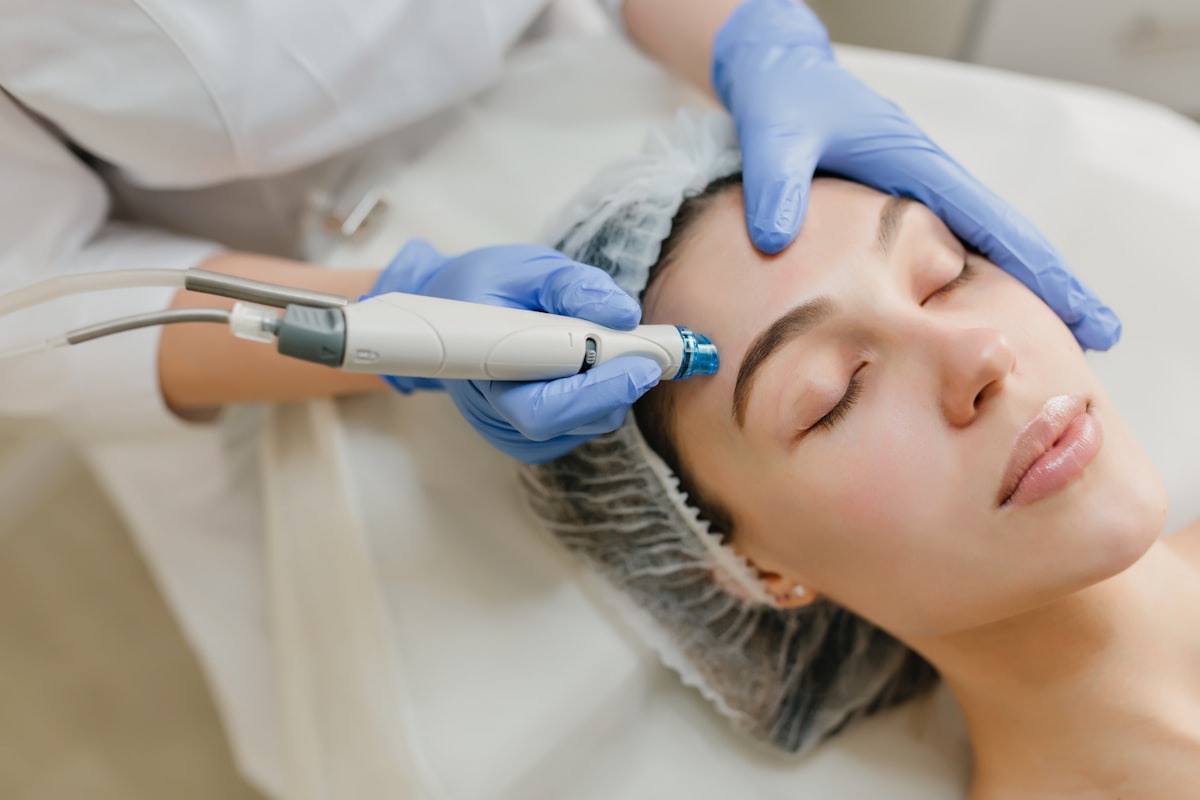
Chemical Peels
Dermatologist-led acid peels for pigmentation, acne scarring and uneven tone — with peel depth matched to your skin type and downtime tolerance.
Learn More
Chemical Peel
A precisely selected acid solution exfoliates the skin surface to reveal smoother, more even-toned skin.
Learn MoreReady to Begin Your Transformation?
Book a free consultation with our specialist team at Enfield Royal Clinic Khalifa City.