

Laser Acne Scar Removal in Khalifa City, Abu Dhabi 2026–2027: Your Complete Treatment Guide
📊 Key Facts
- Laser treatments offer clinically validated improvement for acne scars when matched to scar type
- Enfield Royal Clinic prioritises honest assessment and realistic expectations over sweeping treatment promises
- Meaningful improvement differs from complete eradication; understanding this distinction ensures successful treatment
- Atrophic scars, the most common type, include rolling, boxcar, and icepick subcategories requiring different approaches
- Rolling scars respond well to ablative and fractional laser treatments for skin texture improvement
Acne scars are one of the most emotionally significant skin concerns we see at Enfield Royal Clinic in Khalifa City, Abu Dhabi. They are also among the most complex to treat well. Laser technology has advanced considerably, and when matched correctly to scar type and skin tone, it can deliver a meaningful improvement in skin texture and appearance. However, meaningful improvement is not the same as complete eradication — and understanding that distinction before you begin is the foundation of a successful treatment experience.
This guide covers everything you need to know: scar classification, laser modalities, realistic outcome ranges, candidacy criteria, pre- and post-care protocols, downtime expectations, side effect management, and how laser compares to alternative approaches.
Understanding Acne Scar Types — Why Classification Matters
Not all acne scars respond equally to laser treatment. Before any technology is recommended, a qualified practitioner must classify the scar type, because the mechanism of each scar determines which modality — if any — is most appropriate.
Atrophic scars (the most common post-inflammatory scarring) fall into three sub-categories:
- Rolling scars — broad, shallow depressions with sloping edges caused by fibrous bands tethering skin to subcutaneous tissue. These respond well to ablative and fractional lasers, particularly when combined with subcision.
- Boxcar scars — defined, sharper-edged depressions. Moderate-to-shallow boxcar scars respond reasonably well to fractional resurfacing; deep boxcar scars may require a combination approach.
- Ice pick scars — narrow, deep, V-shaped tracts extending into the dermis. These are notoriously difficult to address with laser alone and often require punch excision or TCA cross before laser resurfacing.
Hypertrophic and keloidal scars — raised, thickened scars — have a different treatment pathway entirely and are generally not suitable for the same laser protocols used for atrophic scars.
If a clinic recommends a laser treatment without first classifying your scars, that is a signal to seek a second opinion.
Laser Technologies Used for Acne Scar Removal
Fractional CO2 Laser
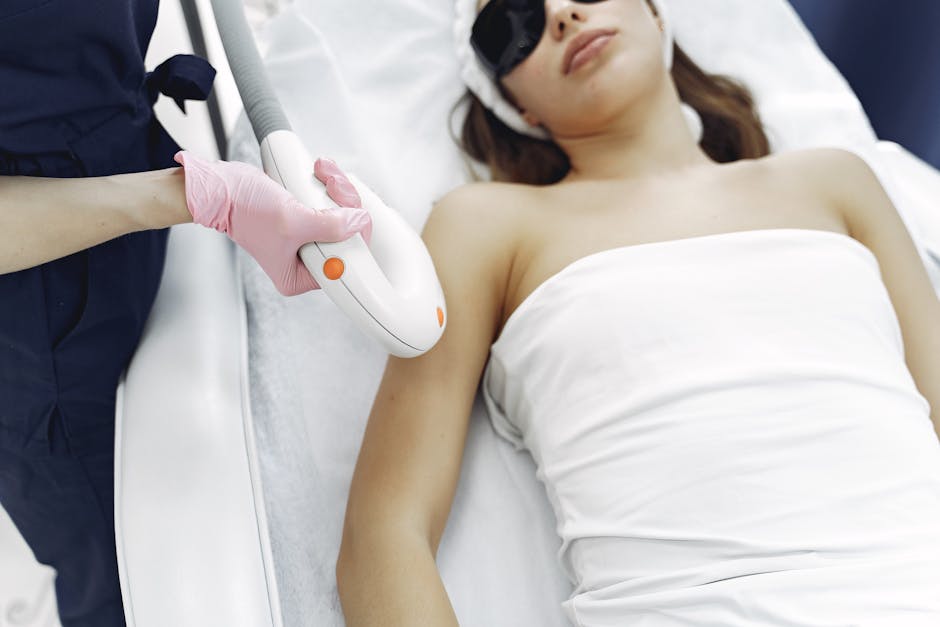
Considered the gold standard for atrophic acne scarring, fractional CO2 delivers ablative energy in thousands of microscopic columns, leaving surrounding tissue intact to accelerate healing. It penetrates deeply enough to stimulate significant collagen remodelling and dermal remodelling. It delivers the strongest results but carries the most downtime — typically 7 to 10 days of visible healing — and requires careful skin type assessment. Patients with deeper Fitzpatrick skin types (IV–VI, common in the UAE population) carry a higher risk of post-inflammatory hyperpigmentation (PIH) if the settings are not correctly adjusted.
Fractional Erbium Laser
Fractional erbium (Er:YAG) is a gentler ablative option with a more selective water absorption profile, meaning less thermal diffusion to surrounding tissue. Recovery time is shorter (typically 5–7 days), and it is better tolerated in patients with medium to olive skin tones. Results per session are incrementally less dramatic than CO2, but the cumulative outcome across multiple sessions is often comparable, with a reduced PIH risk.
Non-Ablative Fractional Laser
Non-ablative fractional lasers — such as 1540nm or 1550nm erbium-glass devices — deliver heat into the dermis without removing the surface epidermis. The result is collagen stimulation with minimal to no visible downtime (mild redness for 24–48 hours). The trade-off is a lower per-session impact, requiring more sessions (typically 4–6) to achieve comparable outcomes to ablative protocols. These are well-suited for patients with active professional or social commitments who cannot accommodate extended downtime, and for those with darker skin tones where ablative risk is higher.
How Laser Treatment Works Mechanically
All three modalities operate on the same fundamental principle: controlled thermal injury triggers the wound-healing cascade, inducing fibroblast activation and new collagen synthesis. Over weeks and months, this remodelling process raises the floor of atrophic depressions, improves skin texture, and reduces the visual depth and shadow of scars. The improvement is real and measurable — but it is a biological process that takes time, not an immediate cosmetic fix.
Fitzpatrick Skin Type Considerations in Abu Dhabi
This is a point that many clinics in the UAE underemphasise. Abu Dhabi's population includes a high proportion of patients with Fitzpatrick types III–V, where melanocytes are highly reactive and more easily triggered into post-treatment hyperpigmentation by heat and UV. The Abu Dhabi climate compounds this: intense sun exposure during recovery significantly increases the risk of PIH and prolonged redness.
At Enfield Royal Clinic, every consultation includes a formal Fitzpatrick skin classification. Laser settings — including fluence, pulse duration, and coverage density — are calibrated to your specific skin type. In some cases, a non-ablative or fractionated approach is clinically preferable to aggressive ablation, even if the patient desires faster results.
Are You a Good Candidate?
Ideal candidates for laser acne scar removal are those who:
- Have stable, controlled acne — not active inflammatory breakouts. Treating scars while acne is still active is counterproductive; new lesions will create new scars, and inflamed skin is not safe to laser. Acne must be managed first.
- Have atrophic (depressed) scarring rather than purely raised or keloidal scarring.
- Have realistic expectations — understanding that laser treatment can meaningfully improve texture and reduce scar depth, but is unlikely to render skin completely smooth in the way digital retouching might suggest.
- Are committed to sun protection — particularly critical in Abu Dhabi's climate, where UV exposure during recovery can compromise results and trigger PIH.
- Are not currently pregnant or breastfeeding, and are not on isotretinoin (Accutane), which must be stopped well in advance of any laser procedure.
Patients who may not be good candidates upfront include those with very dark skin tones where ablative energy carries disproportionate risk without specialist management, those with current keloid scarring, or those expecting single-session resolution of deep structural scarring.
Pre-Treatment Preparation
Proper preparation significantly influences outcomes. At Enfield Royal Clinic, our pre-treatment protocol typically includes:
- Topical priming — a course of retinoids and/or hydroquinone (for higher Fitzpatrick types) to precondition the skin and reduce PIH risk.
- Active acne stabilisation — confirming that acne is controlled before proceeding.
- Sun avoidance — strict SPF50+ use for a minimum of 2–4 weeks before treatment.
- Medication review — checking for photosensitising agents, blood thinners, and isotretinoin history.
- Antiviral prophylaxis — for patients with a history of cold sores, as ablative laser can trigger herpes simplex reactivation.
Post-Treatment Care and Recovery
Abu Dhabi's sun intensity makes post-laser care non-negotiable. Recovery expectations vary by modality:
| Modality | Visible Downtime | Return to Work | Full Healing |
|---|---|---|---|
| Fractional CO2 | 7–10 days | 7–10 days | 2–4 weeks |
| Fractional Erbium | 5–7 days | 5–7 days | 1–2 weeks |
| Non-Ablative Fractional | 1–2 days | Next day | 3–5 days |
During recovery, patients should expect erythema (redness), peeling or flaking of treated skin, and in ablative cases, mild swelling and oozing in the first 24–48 hours. These are normal and expected responses, not complications.
Post-care essentials include:
- Gentle, fragrance-free cleansing
- Prescribed emollients and barrier repair creams
- Strict SPF50+ application every morning — without exception in the Abu Dhabi climate
- Avoiding direct sun exposure, strenuous exercise, and swimming pools (chlorine) during the healing phase
- No active skincare actives (retinoids, AHAs, vitamin C) until the skin is fully healed
Potential Side Effects — An Honest Assessment
Side effects are manageable when treatment is performed correctly, but they are real and patients should be prepared:
- Post-inflammatory hyperpigmentation (PIH) — the most common concern in Abu Dhabi's patient demographic, usually temporary but can persist for weeks to months if not properly managed.
- Prolonged erythema — more common with CO2, usually resolves within 2–4 weeks.
- Infection — rare but possible if post-care instructions are not followed.
- Scarring — extremely rare with correctly calibrated settings and appropriate candidacy selection.
- Textural changes — temporary roughness or texture irregularity during healing is normal.
All side effects are discussed in full during your consultation at Enfield Royal Clinic, ensuring informed consent before any treatment begins.
How Many Sessions Will You Need?
This is one of the most common questions — and the most important one to answer honestly. The number of sessions depends on scar severity, type, and the modality selected:
- Fractional CO2 or erbium: Typically 2–4 sessions, spaced 6–8 weeks apart, to allow full collagen remodelling between treatments.
- Non-ablative fractional: Typically 4–6 sessions, spaced 3–4 weeks apart.
Collagen remodelling continues for 3–6 months after each session, which is why results are assessed at the end of a full course rather than after a single treatment. Patients who expect dramatic results after one session will be disappointed — not because the treatment isn't working, but because the biology requires time.
Laser vs. Alternative Approaches
Laser is not always the first or only answer. A comprehensive scar treatment plan may incorporate:
- Subcision — a minor surgical procedure to release fibrous tethering beneath rolling scars, allowing the skin to lift. Highly effective for rolling scars, often combined with laser in the same treatment plan.
- TCA Cross — trichloroacetic acid applied precisely into ice pick scars to stimulate fibrosis and gradually fill the tract. Often the most effective approach for ice picks before or alongside laser.
- Microneedling with or without radiofrequency — a good option for milder scarring, darker skin types where laser risk is higher, or as a maintenance therapy.
- Dermal fillers — temporary volumising of individual scar depressions, useful for rapid improvement while longer-term remodelling is underway.
- PRP Treatment in Khalifa City Abu Dhabi — platelet-rich plasma can be used adjunctively to accelerate healing and enhance collagen stimulation alongside fractional laser.
For many patients, the most effective outcome comes from a combination approach rather than any single modality. At Enfield Royal Clinic, treatment plans are designed around your specific scar map, skin type, lifestyle, and timeline — not a one-size-fits-all protocol.
Pricing: What Influences the Cost?
Laser acne scar removal pricing in Abu Dhabi varies meaningfully depending on:
- Technology selected — ablative CO2 carries a higher per-session cost than non-ablative fractional.
- Treatment area — full face vs. targeted areas.
- Number of passes and coverage density — determined by scar severity.
- Practitioner credentials — board-certified dermatologists and experienced cosmetic surgeons command appropriate pricing that reflects their expertise and accountability.
- Number of sessions in the treatment plan.
At Enfield Royal Clinic, pricing is discussed transparently during your consultation once a personalised plan is established. We also offer structured payment plan options — visit our Cosmetic Clinic Abu Dhabi Payment Plan Guide 2026–2027 for details on how flexible financing works at our clinic.
Patients exploring the broader range of treatments available at our Khalifa City location may also find our guides on Skin Tightening Treatment Abu Dhabi 2026–2027 and Best Laser Hair Removal Clinic in Abu Dhabi 2026–2027 useful for understanding the full scope of our laser and aesthetic services.
The Consultation Process at Enfield Royal Clinic
Every laser acne scar treatment at Enfield Royal Clinic begins with a detailed clinical consultation, not a sales conversation. Our practitioners will:
- Classify your scar types using established clinical grading systems.
- Assess your Fitzpatrick skin type and advise on the most appropriate modality.
- Review your acne history and current status — treatment proceeds only when acne is controlled.
- Discuss realistic outcome ranges for your specific scarring pattern.
- Present a personalised treatment plan including modality, estimated sessions, interval spacing, pre- and post-care requirements, and transparent pricing.
- Obtain informed consent — meaning you fully understand the process, the realistic results, the downtime, and the possible side effects before anything is agreed.
This process reflects our commitment to being an honest, informed partner in your skin health journey — not a clinic that over-promises and under-delivers.
Book Your Consultation at Enfield Royal Clinic, Khalifa City
If you are based in Khalifa City, Abu Dhabi or Al Ain and are considering laser acne scar removal, we invite you to begin with a thorough clinical assessment. Understanding whether you are a good candidate, which laser modality suits your skin, and what a realistic outcome looks like for your specific scarring is the most important step you can take — and it starts with an honest conversation.
Enfield Royal Clinic is located in Khalifa City, Abu Dhabi, and welcomes patients from across the emirate and Al Ain. Contact us to schedule your personalised consultation with one of our qualified cosmetic practitioners.
Treatments Mentioned in This Article

Dermal Fillers
Hyaluronic acid fillers restore lost volume and soften deeper facial lines.
Learn More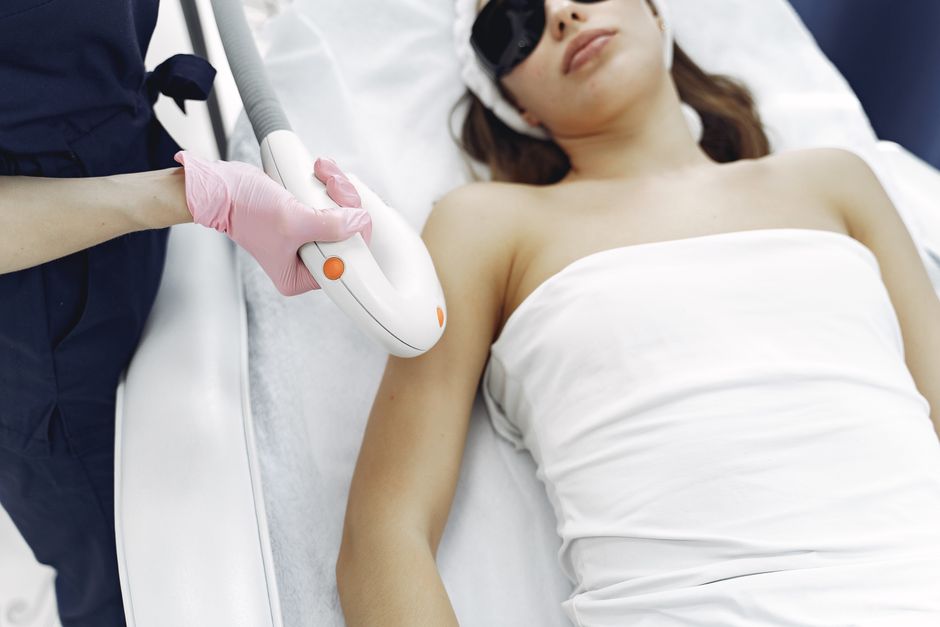
Laser Hair Removal
Medical-grade laser hair removal for the face and body — long-term reduction with settings calibrated to your skin tone for safe, effective results.
Learn More
Microneedling
Medical-grade collagen induction therapy for acne scarring, enlarged pores, fine lines and overall skin texture improvement.
Learn MoreReady to Begin Your Transformation?
Book a free consultation with our specialist team at Enfield Royal Clinic Khalifa City.