
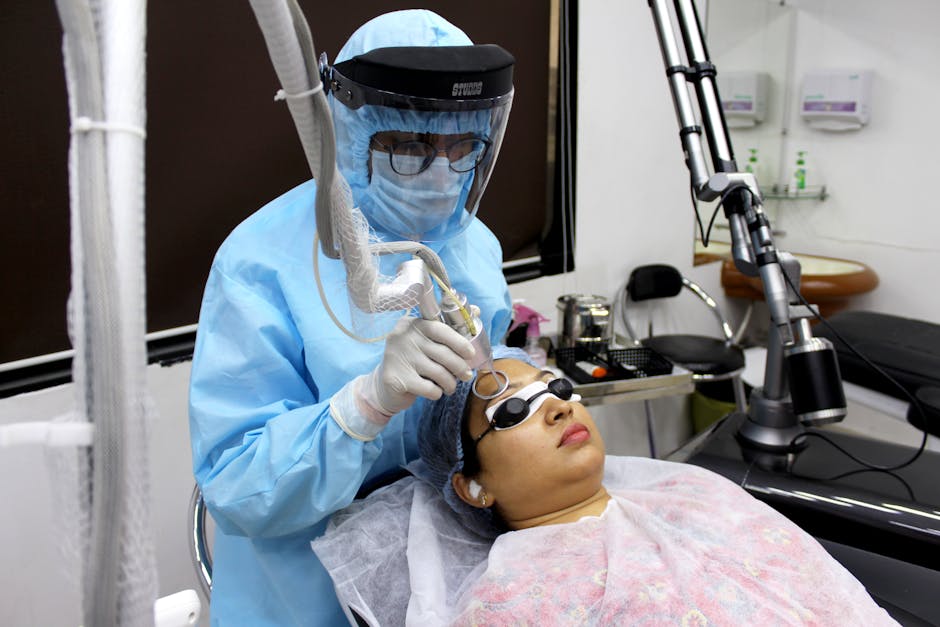
Acne Scar Treatment Clinic Khalifa City Reviews 2026–2027
Acne Scar Treatment Clinic Khalifa City Reviews 2026–2027: A Transparent, Evidence-Based Guide
📊 Key Facts
- Enfield Royal Clinic in Khalifa City, Abu Dhabi offers evidence-based acne scar treatments
- Atrophic scars are most common type, sit below skin surface from insufficient collagen
- Ice-pick scars are deep V-shaped channels difficult to treat with surface-level modalities
- Boxcar scars are wider U-shaped depressions, different treatment approach than ice-pick scars
- Proper scar classification is essential before choosing treatment to avoid costly mistakes
If you have been searching for genuine acne scar treatment clinic Khalifa City reviews, you already know the challenge: most content online either overpromises dramatic transformations or recycles the same vague language without helping you understand what a treatment actually does, who it suits, or what it realistically costs. This guide is different. Drawing on clinical practice at Enfield Royal Clinic in Khalifa City, Abu Dhabi, it delivers the structured, honest information you need—from scar classification through to consultation preparation—so that when you finally book that appointment, you arrive informed, not anxious.
Understanding Acne Scars: Why Classification Changes Everything
Not all acne scars respond to the same treatment. Clinicians classify post-acne scarring into three principal categories, and choosing a modality without identifying your scar type is one of the most common—and costly—mistakes patients make.
Atrophic scars are the most prevalent. They sit below the surrounding skin surface because the healing process produced insufficient collagen. Within this group, three subtypes exist:
- Ice-pick scars — narrow, deep, V-shaped channels that extend into the dermis. They are notoriously difficult to treat with surface-level modalities alone because depth is the defining challenge.
- Boxcar scars — wider, U-shaped depressions with defined vertical edges. They typically respond better to resurfacing technologies than ice-pick lesions.
- Rolling scars — broad, wave-like undulations caused by fibrous tethering beneath the skin. Subcision—a minor surgical technique that severs those fibrous bands—is often part of the treatment plan.
Hypertrophic and keloid scars sit above the skin surface, the result of excessive collagen deposition. They are far less common after acne than atrophic variants but require entirely different management, including corticosteroid injections or pulsed-dye laser.
A qualified practitioner will document your scar subtype, skin phototype (Fitzpatrick scale), and sebaceous activity before recommending anything. If a clinic skips this step and moves straight to a sales pitch for a single product, treat that as a red flag.

Treatment Modalities Available in Khalifa City: What They Do and How
1. Microneedling (Collagen Induction Therapy)
Devices such as the Dermapen 4 create controlled micro-injuries in the dermis, triggering a wound-healing cascade that may assist in stimulating new collagen formation. For atrophic scars—particularly boxcar and rolling subtypes—multiple sessions (typically 4–6, spaced four weeks apart) are usually required before meaningful textural change is observable. Results are gradual; most patients notice progressive improvement over three to six months after completing a course, not immediately after a single session.
Realistic outcome range: Mild-to-moderate atrophic scars tend to show more measurable improvement than deep ice-pick lesions. Expect partial reduction in scar depth rather than complete elimination.
Side effects and downtime: Redness, mild swelling, and pinpoint bleeding are expected for 24–72 hours. Temporary post-inflammatory hyperpigmentation (PIH) is a meaningful risk for Fitzpatrick IV–VI skin tones—a critical consideration in the UAE population.
2. Laser Therapy
Two broad categories apply to scar remodelling:
- Ablative lasers (e.g., fractional CO₂) vaporise precise columns of skin tissue, prompting remodelling of the entire treatment zone. They can assist in improving surface texture for moderate-to-severe atrophic scars but carry a higher PIH and infection risk, demanding a downtime of seven to fourteen days and rigorous aftercare protocols.
- Non-ablative fractional lasers (e.g., 1540 nm or 1927 nm platforms) heat the dermis without removing the epidermis, yielding a gentler response with less downtime (typically two to five days of redness) and a lower—though not absent—PIH risk. Multiple sessions are required to accumulate clinical benefit.
Realistic outcome range: Neither ablative nor non-ablative laser eliminates scarring entirely. Published literature suggests average depth-reduction improvements in the range of 25–75% across patient cohorts, with wide individual variation depending on scar type, skin tone, and adherence to aftercare.
3. Chemical Peels
Chemical exfoliants—ranging from superficial glycolic acid (10–70%) to medium-depth TCA (trichloroacetic acid, 20–35%)—accelerate epidermal turnover and, at medium depths, induce dermal remodelling. They are most appropriate for mild atrophic scars and post-acne dyschromia (uneven pigmentation) rather than deep structural defects. A series of four to eight sessions is standard.
Side effects and downtime: Superficial peels involve three to five days of flaking; medium-depth TCA peels require up to ten days of significant peeling and social downtime. PIH risk is elevated in darker skin phototypes and must be mitigated with pre-treatment priming agents.
4. Dermal Fillers for Scar Correction
Hyaluronic acid fillers, or longer-lasting biostimulator agents such as poly-L-lactic acid (PLLA), can be injected beneath individual depressed scars to assist in lifting them to the level of surrounding skin. The effect for rolling and boxcar scars is often immediate and visually appreciable, but it is not permanent—hyaluronic acid fillers typically last six to eighteen months before partial reabsorption.
Important caveat: Fillers do not remodel scar tissue; they temporarily fill the void beneath it. They are best used as part of a combination approach alongside collagen-stimulating modalities.
5. Subcision and Minor Surgical Techniques
For tethered rolling scars, subcision—performed with a hypodermic needle inserted beneath the scar to release fibrous bands—addresses the structural cause of the depression. It is frequently combined with microneedling or PRP (platelet-rich plasma) to optimise the healing response. Recovery involves bruising and mild swelling for five to ten days.
Combination Approaches: Why Single-Modality Treatment Is Often Insufficient
A practitioner who recommends one treatment for every patient is not practising individualised medicine. The literature—and clinical experience at centres such as Enfield Royal Clinic—consistently demonstrates that combination protocols yield superior outcomes for complex or mixed-scar presentations. A typical protocol might sequence:
- Subcision to release tethered scars
- A course of fractional laser to address surface texture
- Microneedling with PRP to consolidate collagen remodelling
If your initial consultation produces a multi-step, sequenced plan with documented rationale, that is a strong signal of clinical rigour. You can explore how the clinic's broader approach to skin health integrates these modalities in the Acne Treatment Clinic Khalifa City 2026 premium guide.
Cost Considerations: Why Pricing Varies and What to Expect
Acne scar treatment pricing in Khalifa City and Abu Dhabi is influenced by multiple variables:
- Treatment modality — ablative laser sessions command higher fees than superficial peels, reflecting equipment cost and clinical skill required.
- Session number — a full protocol of four to six microneedling sessions will carry a cumulative cost meaningfully higher than the per-session rate suggests.
- Scar severity and surface area — extensive scarring covering the full face requires longer treatment time.
- Practitioner seniority — dermatologists or plastic surgeons typically charge more than general practitioners or beauticians, and for good reason.
- Clinic overheads and regulatory compliance — licensed, fully accredited UAE clinics carry legitimate operating costs reflected in pricing.
Transparent clinics will provide a written breakdown after consultation rather than quoting a single headline figure. Be cautious of unusually low prices; in aesthetic medicine, the risks of under-qualified treatment—PIH, scarring exacerbation, infection—fall on you, not the provider.
For a broader view of cost-conscious, quality-assured services at the clinic, see Affordable Medical Clinic Services in Khalifa City 2026.
Patient Selection: Are You a Good Candidate?
Not every patient is an ideal candidate for every modality at every point in time. Absolute or relative contraindications include:
- Active acne lesions — treating scarring while acne is active is counterproductive; underlying acne must be controlled first.
- Recent isotretinoin use — most protocols require a six to twelve-month washout period before ablative or fractional procedures.
- Pregnancy or breastfeeding — most clinic procedures are deferred.
- Fitzpatrick V–VI skin tones — higher PIH risk mandates a more conservative approach and longer inter-session intervals.
- Unrealistic expectations — patients seeking complete elimination of deep ice-pick scars within two sessions are not suitable candidates; honest pre-treatment counselling is essential.
Evaluating Clinic Credentials in the UAE: What Regulation Requires
In the UAE, aesthetic medical procedures must be performed by practitioners licensed by the Abu Dhabi Department of Health (DoH) or the Dubai Health Authority (DHA), depending on emirate. Key checks:
- Ask to see the clinic's trade licence and the practitioner's DoH/DHA individual practitioner licence. These are public documents and legitimate clinics will not hesitate to provide them.
- Confirm whether the practitioner is a board-certified dermatologist, plastic surgeon, or general practitioner with specific aesthetic training endorsements.
- Enquire about device registration—laser platforms in the UAE must be registered with the relevant health authority.
- JCI (Joint Commission International) accreditation, while not mandatory, is a credible marker of institutional quality standards.
Enfield Royal Clinic operates in full compliance with Abu Dhabi DoH regulations. You can review the clinic's wider credentials and service quality profile in the Best Aesthetic Clinic in Abu Dhabi 2026 guide.
Interpreting Acne Scar Treatment Clinic Khalifa City Reviews: A Critical Framework
When reading reviews—whether on Google, Trustpilot, or clinic websites—apply the following filter:
Signals of a genuine, reliable review:
- Specific scar type and treatment modality mentioned (e.g., "boxcar scars treated with three sessions of fractional CO₂")
- Realistic timeline reported (results described over months, not days)
- Acknowledgement of side effects or temporary discomfort alongside positive outcomes
- Multiple sessions referenced rather than a single miraculous session
- Description of the consultation process, not just the result
Red flags in reviews (and clinic marketing):
- Claims of "complete" or "permanent" scar removal
- Before-and-after images without verified dates, lighting consistency, or photographic conditions disclosed
- Reviews that describe zero downtime for ablative laser or deep chemical peels
- Generic language with no specific treatment or timeline detail
- A disproportionate cluster of five-star reviews posted within a short period
Also consider the source of the review. Testimonials hosted exclusively on a clinic's own website cannot be independently verified. Cross-reference with Google Maps reviews, which are harder to curate and more likely to include a balanced range of patient experiences.
The Consultation Process: Questions Worth Asking
A premium consultation at a qualified clinic is not a sales appointment—it is a clinical assessment. Come prepared with these questions:
- What specific scar subtypes do I have, and how does that determine my treatment plan?
- Which modality do you recommend, and why—over the alternatives?
- How many sessions will I realistically need, and at what intervals?
- What is the realistic percentage improvement I might expect for my scar type and skin tone?
- What are the specific risks of PIH for my Fitzpatrick phototype?
- What is the downtime for each session, and what aftercare will I need to follow?
- What happens if I do not see improvement after the planned sessions?
- May I see your DoH practitioner licence and the clinic's device registration?
If a practitioner deflects, rushes, or seems unfamiliar with scar classification during this conversation, that is diagnostic information in itself.
For complementary skin health services that frequently pair with scar management protocols—such as skin rejuvenation and bio-remodelling—explore the clinic's Vampire Facial PRP Abu Dhabi 2026 guide and the Profhilo Treatment Abu Dhabi 2026 guide, both of which discuss how collagen-stimulating injectables can assist in overall skin quality alongside scar-specific protocols.
Final Perspective: What the Best Reviews Actually Tell You
The most informative acne scar treatment clinic Khalifa City reviews are not the ones that claim perfection. They are the ones that describe a thoughtful consultation, a realistic plan, honest communication about what would and would not be achievable, and a result that aligned with what was promised—not more, not less. That alignment between expectation and outcome is the hallmark of a trustworthy clinic.
At Enfield Royal Clinic in Khalifa City, the approach is grounded in exactly that principle: individualised assessment, transparent communication, and evidence-informed treatment planning. If you are ready to begin with a properly structured consultation, the first step is straightforward—book your assessment and arrive with your questions prepared.
For related reading on skin health and aesthetic treatments at Enfield Royal Clinic, explore the Skin Tightening Clinic Khalifa City 2026 guide and the Skin Whitening Clinic Khalifa City 2026 guide.
Ready to Begin Your Transformation?
Book a free consultation with our specialist team at Enfield Royal Clinic Khalifa City.