
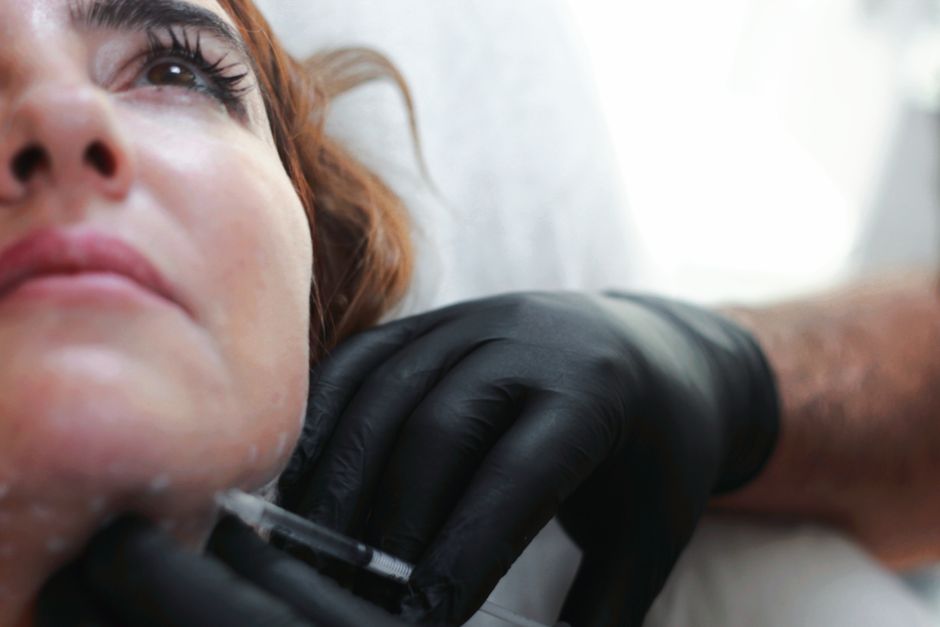
Jawline Filler in Abu Dhabi 2026–2027: Cost & Results
Jawline Filler in Khalifa City, Abu Dhabi (2026–2027): Cost, Results & What to Expect
📊 Key Facts
- Jawline filler is most sought-after non-surgical treatment in Khalifa City, Abu Dhabi
- Hyaluronic acid (HA) is most commonly used filler category for jawline procedures
- Treatment begins with personalized consultation assessing anatomy, goals, and candidacy
- Filler adds volume and refines contour without surgical intervention
- Results depend on existing anatomy, volume used, and practitioner technique
Facial structure plays a significant role in how features are perceived—and for many people, the jawline sits at the centre of that conversation. Jawline filler has become one of the most requested non-surgical cosmetic treatments across the UAE, and patients in Khalifa City, Abu Dhabi are increasingly seeking this procedure as a way to address contour concerns without surgery.
This guide is written to give you an honest, detailed picture of what jawline filler involves—from how it works and what it costs, to who makes a suitable candidate and what the realistic recovery looks like.
What Is Jawline Filler and How Does It Work?
Jawline filler is a form of dermal filler treatment in which an injectable gel is placed strategically along the jaw to add volume, refine contour, or address asymmetry. The most commonly used filler category is hyaluronic acid (HA)—a naturally occurring substance in the body that attracts and retains water molecules, creating a volumising effect beneath the skin.
The mechanism is straightforward: the filler is injected at precise points along the mandibular border (the bony jawline edge) or at the angles of the jaw to add structural support. The result is a change in shadow, projection, and perceived definition—though the degree of change depends entirely on your existing anatomy, the volume used, and the technique of the practitioner.
It is important to understand that filler does not restructure bone. It adds soft tissue volume. This distinction matters when setting expectations for what the treatment can and cannot achieve.

Filler Types Available: What Are the Differences?
The filler landscape has expanded significantly, and not all products perform the same way in the jaw area. Here is a general breakdown of categories available at aesthetic clinics in Abu Dhabi:
Hyaluronic Acid (HA) Fillers
The most widely used class of jawline fillers. HA fillers vary in their cross-linking density—meaning some are softer and more pliable while others are firmer and more structural. For the jaw, practitioners typically select higher-viscosity HA formulations that can support and project tissue effectively. HA fillers are reversible: an enzyme called hyaluronidase can dissolve the filler if needed, which adds a layer of reassurance for first-time patients.
Calcium Hydroxylapatite (CaHA) Fillers
A denser, longer-lasting category of filler sometimes used for structural areas like the jaw. These are not reversible in the same way as HA fillers and tend to have a slower degradation timeline.
Poly-L-Lactic Acid (PLLA)
A biostimulator rather than a traditional filler—it works gradually by encouraging collagen production. Less commonly used for immediate jaw contouring.
During your consultation at Enfield Royal Clinic, the most appropriate filler type for your facial structure, skin quality, and goals will be discussed. No single product is universally ideal, and product selection is part of the personalised assessment process.
How Much Does Jawline Filler Cost in Khalifa City, Abu Dhabi?
Pricing for jawline filler in the UAE varies based on several factors:
- Volume of filler used (typically measured in millilitres or syringes)
- Filler product category (HA vs. CaHA, brand tier)
- Practitioner qualification and experience level
- Clinic location and facility standard
In Khalifa City and across Abu Dhabi, jawline filler treatments generally range from AED 1,200 to AED 3,500 per session, depending on the above variables. Some patients require one syringe; others with more significant contouring goals may need two or more.
A point that competitors rarely address: maintenance appointments carry their own cost. Because HA fillers dissolve over time, touch-up sessions every 12 to 18 months are part of the realistic cost picture. Planning for this from the start is financially wise. At your initial consultation, the clinic can provide a more precise estimate once the required volume and product type are determined.
How Much Filler Is Typically Needed?
This is one of the most common questions—and one of the hardest to answer without seeing the patient. As a general guide:
- Subtle refinement along the jaw border: 0.5 to 1 ml
- Moderate volume addition at the jaw angles: 1 to 2 ml
- More significant structural contouring: 2 to 3 ml or more
Face shape influences this considerably. Patients with a rounder or wider lower face may require different placement and volume than those with an already angular but uneven jaw. The concept of 'natural results' is frequently used in marketing—but what matters more is whether the outcome is tailored to your face and your goals, not a generic template.
Your practitioner should assess your facial proportions, bone structure, and skin quality before recommending any volume.
Is Jawline Filler Suitable for You?
Jawline filler is generally considered suitable for adults who:
- Are in good general health with no active skin infections in the treatment area
- Have realistic expectations about what non-surgical treatment can achieve
- Are not pregnant or breastfeeding
- Do not have a known allergy to filler components
- Understand that results are temporary and maintenance is required
Candidacy is always determined through a face-to-face consultation, not an online form or photograph. Factors like skin laxity, existing bone structure, and prior filler history all influence whether this treatment is appropriate for you at this time.
A note on gender differences: Male patients typically seek greater jaw angularity and projection, often requiring firmer, higher-viscosity filler placed at the mandibular angle. Female patients more commonly seek refined contour along the jawline itself. These are generalisations—individual goals always take precedence.
Jawline Filler vs. Other Jawline Treatments
It helps to understand how filler compares to other options:
| Treatment | Mechanism | Reversibility | Downtime |
|---|---|---|---|
| HA Jawline Filler | Adds volume via injection | Yes (dissolves or enzymatic reversal) | Minimal (1–3 days) |
| Jaw Botox (Masseter) | Relaxes masseter muscle | Temporary, wears off | Minimal |
| Chin Filler (combination) | Projects chin to complement jaw | Yes | Minimal |
| Surgical Jaw Implant | Structural augmentation | Surgical reversal only | Weeks |
Jaw Botox (injected into the masseter muscle) is a different treatment with a different goal—it reduces bulk in the lower face by relaxing the jaw muscle, which can create a slimmer facial appearance over several weeks. It does not add projection or definition the way filler does. Many patients choose to combine both treatments under a single treatment plan.
What to Expect: The Procedure Itself
Before the procedure: A consultation is conducted to assess your anatomy and discuss goals. You may be advised to avoid blood-thinning medications, alcohol, or supplements like fish oil for several days prior, as these can increase bruising risk.
During the procedure: A topical anaesthetic may be applied to improve comfort. The injections are performed using a fine needle or cannula, depending on the technique and area being treated. The appointment typically takes 30 to 60 minutes.
Immediately after: You will see some volume change right away. However, initial swelling means the final appearance is not yet visible. Most patients see the filler settle and swelling reduce over 5 to 10 days, with full results more accurately assessed at the two-week mark.
Common Temporary Side Effects
Temporary effects are a normal part of the injectable experience. Being prepared for them prevents unnecessary concern:
- Swelling: Expected and typically resolves within 5–7 days
- Bruising: May occur at injection sites; severity varies by individual and depends on vascular anatomy, not practitioner error alone
- Tenderness: The jaw area may feel sore to the touch for 2–4 days
- Mild asymmetry during healing: As swelling resolves unevenly, this usually self-corrects
Any claim suggesting there is no swelling, bruising, or discomfort associated with injectable treatments should be viewed critically—these are normal physiological responses that vary by individual.
Aftercare Instructions
Proper aftercare significantly affects how the filler settles and how long it lasts:
- Avoid touching, pressing, or massaging the jaw area for 24–48 hours
- Stay out of high-heat environments (saunas, steam rooms, direct sun) for at least 48 hours
- Sleep on your back if possible for the first few nights
- Avoid strenuous exercise for 24–48 hours post-treatment
- Do not schedule dental appointments within two weeks of treatment
- Stay well hydrated—HA fillers respond to hydration
How Long Do Results Last?
This is where honesty matters. HA jawline fillers are not permanent. Duration depends on:
- Filler type and density – Structural HA formulations in the jaw typically last 12 to 18 months
- Individual metabolism – Faster metabolisers may notice filler dissolving sooner
- Lifestyle factors – High-intensity exercise, sun exposure, and smoking can accelerate breakdown
- Volume placed – Larger volumes may appear to last slightly longer as they take more time to fully resorb
Maintenance appointments are part of the long-term strategy. Patients who return for touch-ups before filler has fully dissolved often require less volume to maintain their result than those who wait until it has completely resorbed.
Why Professional Administration Matters
The jaw is anatomically complex. Major vascular structures run through and around the mandibular area, and incorrect placement or inappropriate filler choice can lead to complications. In the UAE, aesthetic procedures are regulated, and practitioners must be qualified medical professionals to administer injectables legally.
At Enfield Royal Clinic in Khalifa City, Abu Dhabi, treatments are performed by qualified practitioners with formal training in facial anatomy and injectable techniques. The consultation process is not a formality—it is the foundation of a safe, goal-aligned treatment plan.
Book a Consultation at Enfield Royal Clinic, Khalifa City
Enfield Royal Clinic serves patients from across Khalifa City, Abu Dhabi, Dubai, Sharjah, and the wider UAE. The clinic is located in Khalifa City, Abu Dhabi, and is accessible to residents across the emirate.
If you are considering jawline filler for the first time, or you are returning to reassess your results, the first step is always a personalised consultation. No recommendation on product, volume, or treatment plan can be made responsibly without it.
Results vary by individual anatomy, and outcomes cannot be guaranteed in advance. What can be guaranteed is that your assessment will be thorough, your options will be explained clearly, and your goals will guide the conversation.
Contact Enfield Royal Clinic to schedule your jawline filler consultation in Khalifa City, Abu Dhabi.
Ready to Begin Your Transformation?
Book a free consultation with our specialist team at Enfield Royal Clinic Khalifa City.