
PRP Hair Loss Treatment Khalifa City: 2026-2027 Guide
PRP Hair Loss Treatment in Khalifa City: A Transparent Patient Guide (2026–2027)
📊 Key Facts
- PRP involves drawing blood, concentrating growth factors, injecting into scalp to support hair follicles
- Enfield Royal Clinic requires structured candidacy assessment before recommending any PRP treatment protocol
- PRP contains growth factors PDGF, VEGF, and IGF-1 that interact with dermal papilla cells
- Growth factors may encourage resting hair follicles to shift toward active growth phase
- Guide covers biology, realistic timelines, costs, and honest expectations for 2026–2027 period
If you are researching PRP hair loss treatment in Khalifa City, you likely want straightforward answers—not marketing language. This guide explains what platelet-rich plasma therapy actually does at a biological level, who tends to respond to it, what realistic outcomes look like, how it compares to other options available in Abu Dhabi, and what it costs. Enfield Royal Clinic, located in Khalifa City, Abu Dhabi, provides this information so patients can make genuinely informed decisions before booking a consultation.
What Is PRP and How Does It Work Biologically?
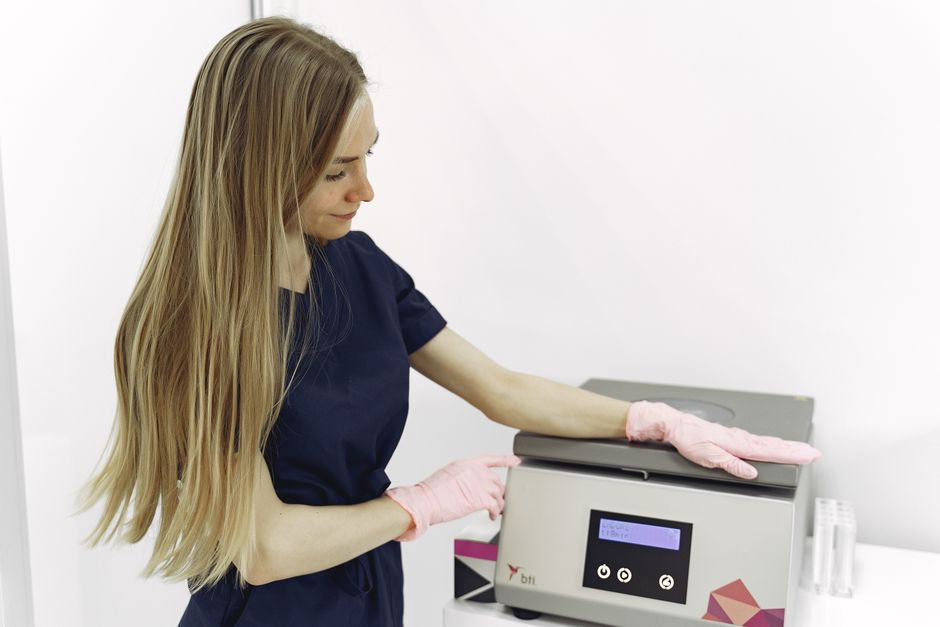
Platelet-rich plasma (PRP) is a concentration of your own blood's platelets—the cells primarily responsible for clotting and wound signalling. When processed correctly, a small vial of your blood is centrifuged to separate plasma rich in platelets from red blood cells. The resulting PRP contains a significantly higher platelet concentration than whole blood, along with associated growth factors such as PDGF (platelet-derived growth factor), VEGF (vascular endothelial growth factor), and IGF-1 (insulin-like growth factor 1).
When injected into the scalp, these growth factors interact with dermal papilla cells—the specialised cells at the base of each hair follicle that govern the hair growth cycle. The proposed mechanism is that this signalling environment may encourage follicles in the resting phase (telogen) to shift toward the active growth phase (anagen), and may support the survival of follicles experiencing miniaturisation, as seen in androgenetic alopecia. PRP does not create new follicles. Its role is supportive—aimed at the follicles that remain biologically active, even if underperforming.
This distinction matters: PRP is not a hair restoration procedure in the surgical sense. It works, when it works, by influencing follicular biology rather than replacing lost follicles.

What Does the Research Actually Say?
Multiple peer-reviewed studies and systematic reviews, including publications in journals such as Dermatologic Surgery and the Journal of Cosmetic Dermatology, report improvements in hair density and thickness in patients with androgenetic alopecia following PRP treatment. However, study limitations are significant: small sample sizes, variable PRP preparation protocols, inconsistent injection techniques, and lack of long-term follow-up data make it difficult to draw absolute conclusions.
The honest summary is this: a meaningful proportion of patients with early-to-moderate hair thinning report improvement in hair density over a treatment course, but non-responders exist in every reported cohort. PRP is not universally effective, and individual biology plays a larger role in outcomes than any single clinic's protocol.
Who Is a Suitable Candidate?
Candidate suitability is one of the most important—and most underreported—aspects of PRP hair treatment. At Enfield Royal Clinic, every prospective patient undergoes a structured assessment before any treatment is recommended. Broadly, PRP tends to be more applicable to patients who:
- Are in the early to moderate stages of hair loss (Norwood Scale I–IV for men; Ludwig Scale I–II for women), where viable follicles are still present
- Have androgenetic alopecia (genetic/hormonal pattern hair loss) as the primary diagnosis
- Are between approximately 25 and 65 years of age, with no absolute cut-off, but with the understanding that heavily scarred or completely bald areas are unlikely to respond
- Do not have active scalp infections, uncontrolled systemic conditions (such as poorly managed diabetes, haematological disorders, or autoimmune conditions affecting the scalp), or a recent history of blood-thinning medications or anticoagulant therapy
- Are not pregnant or breastfeeding at the time of treatment
- Have realistic expectations about the degree and timeline of improvement
Patients with diffuse alopecia areata may sometimes be considered, but this requires a specialist assessment. PRP is generally not indicated for scarring alopecias (e.g., lichen planopilaris, frontal fibrosing alopecia), where follicles have already been permanently destroyed by inflammatory damage.
Hair type, texture, and scalp health are also assessed. Khalifa City's patient demographic includes a broad range of hair types, and candidacy criteria are applied regardless of hair texture or ethnicity.
Treatment Protocol: Sessions, Spacing, and Duration
There is no single universally agreed protocol, but a commonly used starting framework involves:
- Initial phase: 3 to 4 sessions spaced approximately 4 weeks apart
- Maintenance phase: 1 to 2 sessions per year, depending on individual response and ongoing hair loss progression
Each session typically takes 45 to 90 minutes including blood draw, centrifugation, scalp preparation, and injection. A topical anaesthetic or local nerve block is generally applied to the scalp before injection to manage discomfort.
Patients should understand that a single session is unlikely to produce noticeable results. PRP is a cumulative therapy, and meaningful change—when it occurs—is usually observed after completing the initial series.
Realistic Timeline: When Will You See Results?
This is one of the most common questions, and the honest answer involves a range rather than a fixed date.
- Months 1–2: No visible change is expected; this is the biological lag phase
- Months 3–4: Some patients begin to notice reduced shedding
- Months 4–6: Hair density improvements, if they are going to occur, typically become visible in this window
- Month 6–12: Continued gradual improvement may occur with maintenance sessions
Outcomes plateau. PRP does not halt the underlying genetic or hormonal causes of androgenetic alopecia permanently. Maintenance sessions are therefore typically recommended to sustain any improvement achieved.
Safety Profile, Common Side Effects, and Contraindications
Because PRP uses your own blood, the risk of allergic reaction or disease transmission is negligible. However, it is not without side effects:
Common (expected) side effects:
- Scalp tenderness and mild swelling at injection sites for 24–72 hours
- Temporary redness and a sensation of pressure on the scalp
- Minor bruising at the blood draw site
Less common:
- Temporary increased shedding in the first 2–4 weeks post-treatment (a known transient phenomenon)
- Mild headache
Contraindications (conditions where PRP should not be performed):
- Active scalp infection or open wounds
- Platelet dysfunction disorders or thrombocytopaenia
- Chronic liver disease
- Patients on systemic anticoagulants (without medical clearance)
- History of certain cancers, particularly haematological malignancies
- Hypofibrinogenaemia
At Enfield Royal Clinic, a medical history review is conducted before any treatment is administered. Abu Dhabi's healthcare regulatory environment—governed by HAAD (Health Authority Abu Dhabi) standards—requires clinics to maintain documented informed consent processes that include disclosure of side effects and contraindications. Patients are encouraged to disclose all medications and health conditions during their consultation.
Aftercare Requirements Following PRP Sessions
Post-treatment care directly influences how well the scalp recovers and may affect treatment outcomes. Standard aftercare guidance includes:
- Avoid washing the scalp for 24 hours following treatment
- Avoid direct sun exposure to the scalp for 48–72 hours
- No high-intensity exercise, saunas, or steam rooms for 24–48 hours (reduces risk of vasodilation and increased swelling)
- Avoid harsh chemical treatments (colouring, bleaching, chemical relaxers) for at least one week
- Avoid anti-inflammatory medications (ibuprofen, aspirin) for 72 hours post-session, unless medically necessary, as these may theoretically interfere with the inflammatory signalling that PRP relies on
Specific aftercare instructions are provided in writing at Enfield Royal Clinic following each session.
Cost and Pricing Context in Khalifa City and Abu Dhabi (2026–2027)
PRP hair treatment pricing in Abu Dhabi varies depending on the clinic's credentials, the PRP preparation system used, the number of sessions in a package, and whether adjunct treatments are included. As a general benchmark in 2026–2027:
- Per session pricing in Abu Dhabi typically ranges from AED 1,200 to AED 3,000 per session
- Package pricing for an initial series of 3–4 sessions may range from AED 3,500 to AED 9,000, depending on clinic tier and inclusions
- Premium clinics using FDA-cleared or CE-marked centrifuge systems, with physician-administered injections (rather than technician-administered), typically sit at the higher end of this range
Enfield Royal Clinic's pricing is discussed transparently during the initial consultation. Package options are available, and no high-pressure sales approach is used. Patients are under no obligation to commit to a package at the first visit.
How Does PRP Compare to Other Hair Loss Treatments?
Patients in Khalifa City and across Abu Dhabi have access to several treatment categories:
| Treatment | Mechanism | Key Consideration |
|---|---|---|
| PRP | Growth factor stimulation of existing follicles | Requires viable follicles; variable response rate |
| Minoxidil (topical) | Vasodilatory; prolongs anagen phase | Daily application required; shedding on cessation |
| Finasteride (oral) | DHT inhibition (men) | Requires ongoing use; sexual side effects reported |
| Hair transplant surgery | Redistribution of permanent follicles | Surgical; permanent results but requires sufficient donor area |
| Low-level laser therapy (LLLT) | Photobiomodulation of follicle cells | Often used adjunctively; evidence base still developing |
PRP is frequently used in combination with minoxidil or finasteride, and may also be performed alongside low-level laser therapy. Some patients who have undergone hair transplant surgery use PRP post-procedure to support graft survival during the healing phase. These combination approaches are discussed on a case-by-case basis during your consultation at Enfield Royal Clinic.
Is PRP Permissible in Islamic Medical Practice?
This is a question raised by a number of patients in the UAE and Abu Dhabi. Islamic medical scholars have generally addressed PRP within the broader framework of maslaha (public benefit) and the permissibility of using one's own body's materials for medical treatment, which is not considered istikhdam al-dam (prohibited use of blood) in the same category as ingestion. The majority scholarly position, including guidance referenced in UAE contexts, is that PRP—using a patient's own processed blood for therapeutic injection—is permissible (halal) because it involves a medical procedure aimed at health benefit, using the patient's own blood, and does not involve consumption or violation of the body's sanctity. Patients who wish to discuss this further are encouraged to consult with a qualified Islamic scholar or their religious adviser, as individual scholarly opinions may vary.
When to Seek a Consultation at Enfield Royal Clinic, Khalifa City
Consider booking a consultation if:
- You have noticed progressive thinning or increased shedding lasting more than 3 months
- You have a family history of androgenetic alopecia and are noticing early signs
- You have already tried over-the-counter treatments without satisfactory response
- You want a medical assessment to determine whether PRP, an alternative treatment, or a combination approach is appropriate for your specific hair loss pattern and stage
Enfield Royal Clinic is located in Khalifa City, Abu Dhabi—accessible to residents across Khalifa City, Abu Dhabi city, and within reasonable distance for patients travelling from Dubai or Sharjah seeking a premium Abu Dhabi-based aesthetic clinic. The clinic operates under HAAD-compliant standards, with physician-led consultations and documented treatment protocols.
A consultation is not a commitment to treatment. It is an assessment.
Individual results from PRP hair treatment vary based on the stage of hair loss, underlying causes, general health, and biological response. No specific outcome is guaranteed. All information in this guide is provided for educational purposes and does not substitute for a formal medical consultation.
Ready to Begin Your Transformation?
Book a free consultation with our specialist team at Enfield Royal Clinic Khalifa City.