

PRP Treatment in Khalifa City Abu Dhabi: 2026–2027 Guide
PRP Treatment in Khalifa City, Abu Dhabi: What to Know Before Your First Session (2026–2027)
📊 Key Facts
- PRP therapy is one of most requested aesthetic treatments in Abu Dhabi currently.
- PRP uses platelets from your own blood containing growth factors for tissue repair.
- PRP procedure involves blood draw, centrifugation, and reinjection into targeted treatment areas.
- PRP has minimal downtime and addresses hair thinning, skin texture, and cosmetic concerns.
- Guide covers PRP costs in Khalifa City and how to choose qualified providers.
Platelet-Rich Plasma (PRP) therapy has become one of the most requested procedures at aesthetic clinics across Abu Dhabi—and for understandable reasons. It uses components drawn from your own blood, involves minimal downtime, and is applied across a range of cosmetic concerns, from hair thinning to skin texture. But the volume of marketing language surrounding PRP in the UAE can make it difficult to separate evidence-informed practice from exaggerated claims.
This guide is designed to give you a clear, honest picture of what PRP treatment involves, what it may realistically achieve for your specific concern, how much it costs in Khalifa City, and how to choose a provider with the credentials and clinical protocols to deliver it safely.
What Is PRP Therapy and How Does the Procedure Work?
Platelet-Rich Plasma is a concentration of platelets derived from your own blood. Platelets contain growth factors—proteins that play a role in tissue repair signalling. When concentrated and reintroduced into a targeted area, the aim is to stimulate a localised biological response.
The procedure follows a consistent process:
- Blood draw — A small volume of blood (typically 10–30 ml) is drawn from your arm, similar to a standard blood test.
- Centrifugation — The blood sample is placed in a centrifuge, which spins at controlled speeds to separate the plasma layer rich in platelets from red blood cells and other components.
- Activation (optional) — Some protocols involve activating the PRP with calcium chloride or other agents before application; others do not. The method varies by clinic and clinical judgement.
- Injection or topical application — The prepared PRP is injected directly into the scalp, face, or targeted area, or applied topically following micro-needling.
The quality of the PRP preparation—specifically the platelet concentration achieved and the processing method—varies between clinics and has a meaningful impact on outcomes. This is one reason results differ significantly between providers.
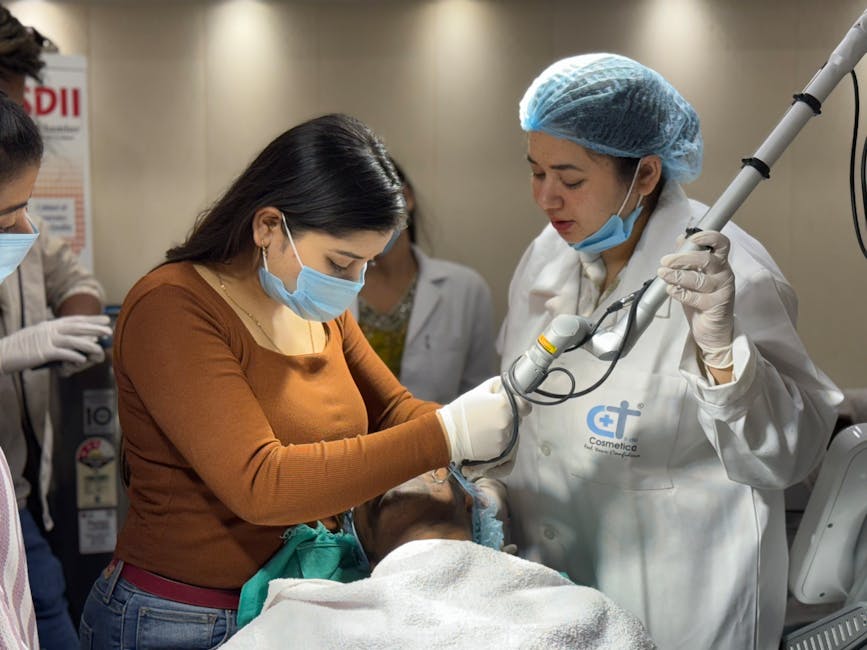
Cosmetic Applications of PRP in Aesthetic Practice
At an aesthetic clinic in Khalifa City, PRP is typically offered for two primary categories:
PRP for Hair Loss
PRP is used as an adjunct in the management of androgenetic alopecia (pattern hair loss) and, in some cases, alopecia areata. It is generally administered via direct scalp injections across the thinning area. The goal is to support hair follicle activity, though it is not a curative treatment and is not appropriate as a standalone therapy for advanced hair loss.
Research into PRP for hair loss is ongoing. Published studies show variable results, and outcomes depend heavily on the stage of hair loss, the patient's baseline platelet count, and treatment frequency. PRP is more likely to be a useful option in early-to-moderate hair thinning than in areas where follicles are no longer active.
PRP for Skin Rejuvenation
When applied to facial skin—often in combination with micro-needling—PRP is used to address concerns such as fine lines, uneven skin texture, enlarged pores, and dull complexion. It is also used in the under-eye area for concerns related to skin quality and pigmentation.
It is important to understand that PRP does not function like a dermal filler or neurotoxin. It does not add volume or relax muscle movement. Its role is limited to stimulating a biological response in the skin; any improvements to texture or tone develop gradually over weeks.
What to Expect During and After PRP Treatment
During the session: A topical anaesthetic cream is typically applied 20–30 minutes before injections to manage discomfort. The procedure itself takes approximately 45 to 75 minutes from blood draw to completion. Some patients experience pressure, mild stinging, or a temporary burning sensation at injection sites.
Immediately after: Redness, swelling, and minor bruising at injection points are expected and normal. For scalp treatments, mild tenderness may persist for 24–48 hours. For facial treatments, redness can resemble a moderate sunburn and typically resolves within 24–72 hours.
Downtime: PRP is considered a low-downtime procedure, though this does not mean no downtime. Most patients can return to non-strenuous activities the following day but should avoid intense physical exercise, sun exposure, swimming, and certain skincare actives for at least 48–72 hours post-treatment.
Realistic Timeline for Results—and Why They Vary
This is an area where many clinics are less transparent than they should be. PRP does not produce immediate visible changes. The biological process it aims to stimulate unfolds over weeks.
- Skin treatments: Initial texture improvements may become noticeable from 4–6 weeks after the first session. A course of 3 sessions, spaced 4–6 weeks apart, is a standard protocol before assessing response.
- Hair treatments: Patients are generally advised to allow 3–6 months before evaluating whether treatment is producing a meaningful response. Shedding may temporarily increase in early weeks, which can be alarming without prior explanation.
Why results vary between individuals: This is not marketing nuance—it is clinically significant. Factors that influence outcome include baseline platelet count and platelet activity, age and hormonal status, severity of the condition being treated, lifestyle factors (smoking, nutritional status, sleep quality), consistency of the treatment protocol, and post-treatment compliance. No provider can guarantee a specific result, and any clinic that does so should be approached with caution.
Potential Side Effects and Contraindications
Because PRP uses your own blood components, the risk of allergic reaction or rejection is low. However, low risk does not mean risk-free.
Common side effects include: Temporary redness and swelling, bruising at injection sites, mild headache (with scalp treatments), and temporary skin sensitivity.
Less common but possible: Infection at injection sites (particularly if sterile protocols are not followed rigorously), nerve discomfort if injection placement is imprecise, and prolonged swelling.
Contraindications—PRP may not be appropriate if you have:
- Active infection or skin inflammation in the treatment area
- Blood disorders or clotting conditions
- Certain autoimmune conditions
- Active cancer or are undergoing chemotherapy/radiotherapy
- Very low platelet count (thrombocytopenia)
- A history of keloid scarring (exercise caution with microneedling combinations)
- Current use of anticoagulant medications
A thorough pre-treatment medical assessment is non-negotiable. A qualified provider will conduct this before any procedure.
PRP Treatment Cost in Khalifa City and Abu Dhabi (2026–2027)
Pricing for PRP in Abu Dhabi is not standardised, and costs vary based on the application area, the number of sessions, the clinic's facilities, and the qualifications of the treating practitioner.
General pricing benchmarks in the Khalifa City / Abu Dhabi area:
- Entry-level single sessions have been referenced in local SERP data from approximately 600 AED
- Mid-range single sessions at established aesthetic clinics typically range from 1,000–2,500 AED per session
- Course packages (3–6 sessions) may offer reduced per-session pricing
- Combined treatments (e.g., PRP with microneedling or alongside hair restoration therapies) are priced accordingly
Cost should never be the sole factor in choosing a PRP provider. A lower price point at a clinic where the practitioner's qualifications cannot be verified, or where preparation protocols are unclear, carries a higher risk than the cost saving justifies.
Regarding insurance: PRP for cosmetic purposes is generally not covered under UAE health insurance plans. Some providers offer in-clinic financing or payment plans; it is worth asking during your consultation.
How to Choose a Qualified PRP Provider in the UAE
In the UAE, aesthetic practitioners must hold valid licensing through either the Department of Health Abu Dhabi (DOH), the Dubai Health Authority (DHA), or the Ministry of Health and Prevention (MOHAP), depending on the emirate in which they practise. Clinics themselves must hold a valid facility licence.
What to verify before booking:
- Confirm the clinic holds a current facility licence for the Abu Dhabi emirate
- Ask for the treating practitioner's specialty and licensing body registration
- Confirm whether the practitioner administering PRP is a licensed dermatologist, plastic surgeon, or a trained aesthetic physician with documented PRP experience
- Ask about the centrifuge system used and what platelet concentration standards the clinic targets
- Request a formal consultation before committing—this should include a medical history review, a discussion of your suitability as a candidate, and an honest conversation about what PRP can and cannot achieve for your specific concern
- Ask how adverse events are managed and what aftercare support the clinic provides
Enfield Royal Clinic in Khalifa City operates under UAE regulatory standards and follows documented clinical protocols for PRP preparation and administration. All procedures are carried out by qualified practitioners, and consultations are conducted prior to any treatment commitment.
Pre-Treatment and Post-Treatment Care
Before your session:
- Avoid blood-thinning medications (aspirin, ibuprofen, fish oil) for at least 5–7 days prior, unless medically contraindicated
- Stay well-hydrated in the 24 hours before treatment
- Avoid alcohol for 24–48 hours before your appointment
- Do not apply topical retinoids or exfoliating acids for 3–5 days prior to facial PRP
After your session:
- Avoid touching or massaging the treated area for at least 6 hours
- No intense exercise, steam rooms, or saunas for 48 hours
- Use a gentle, fragrance-free moisturiser and broad-spectrum SPF 50 sunscreen daily
- Avoid exfoliating actives (retinols, AHAs, BHAs) for at least 5–7 days post-treatment
- For scalp treatments: avoid washing hair for 24 hours; avoid chemical treatments for at least 2 weeks
Post-care compliance has a measurable impact on outcomes. Clinics that rush patients through aftercare instructions are doing them a disservice.
Is PRP the Right Treatment for You?
PRP is a reasonable option to explore for early-to-moderate hair thinning, certain skin texture concerns, and as part of a broader aesthetic treatment plan. It is not a treatment that delivers dramatic or guaranteed results, and it is not appropriate for everyone.
If you are experiencing significant hair loss, a combination approach involving medical therapy alongside PRP will generally be more effective than PRP alone. If your skin concern involves volume loss or deep structural changes, a discussion about whether PRP is the right tool—or whether an alternative or complementary treatment is more appropriate—is exactly the kind of honest conversation a qualified provider should be having with you.
The right clinic will tell you if you are not an ideal candidate. That is a sign of clinical integrity, not a missed opportunity.
Frequently Asked Questions
How many PRP sessions will I need?
Most clinical protocols recommend a course of 3 sessions as a starting point, with maintenance sessions every 6–12 months depending on response. Your treating physician will advise based on your individual assessment.
Is PRP painful?
Topical anaesthesia makes the procedure manageable for most patients. Discomfort levels vary by individual sensitivity and the area being treated.
Can PRP be combined with other treatments?
Yes. PRP is frequently combined with microneedling for skin concerns and with medical hair loss treatments for scalp applications. Your provider will advise on appropriate combinations.
How do I verify a clinic's licence in Abu Dhabi?
The Department of Health Abu Dhabi maintains a public register of licensed healthcare facilities and practitioners. You can verify a clinic's status through the DOH website before booking.
Results from PRP treatment vary between individuals. This article is intended for informational purposes and does not constitute medical advice. A formal clinical consultation is required to assess individual suitability for treatment.
Ready to Begin Your Transformation?
Book a free consultation with our specialist team at Enfield Royal Clinic Khalifa City.