
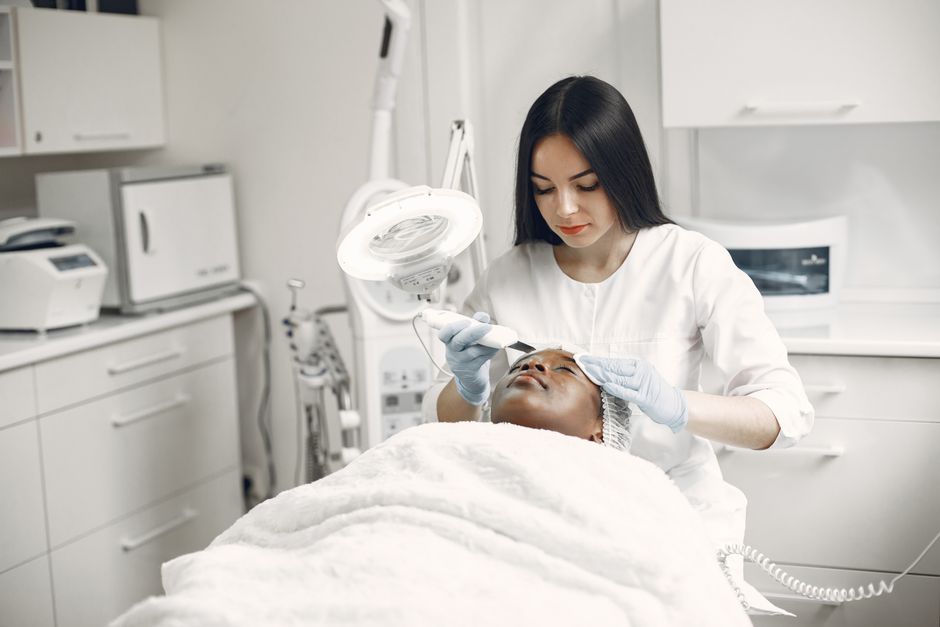
Stretch Mark Treatment Options in Khalifa City Abu Dhabi 2026–2027
Stretch Mark Treatment Options in Khalifa City, Abu Dhabi (2026–2027): A Transparent Guide
📊 Key Facts
- Stretch marks are dermal scarring caused by collagen and elastin fiber rupture from rapid skin stretching.
- Enfield Royal Clinic in Khalifa City offers laser therapy and microneedling treatments with transparent pricing.
- Treatment choice depends on skin type, stretch mark age, and individual goals requiring professional assessment.
- Common stretch mark triggers include pregnancy, rapid weight gain, growth spurts, and corticosteroid use.
- Fresh stretch marks (striae rubra) respond differently to treatment than mature stretch marks (striae alba).
Stretch marks are one of the most searched skin concerns across Abu Dhabi, Dubai, and the broader UAE — and for good reason. They appear on most people at some point in life, yet the information available online ranges from vague to outright misleading. At Enfield Royal Clinic in Khalifa City, we believe every client deserves honest, evidence-based guidance before committing to any treatment plan.
This guide explains what stretch marks are, what treatments are currently available, how each works mechanically, what realistic improvement looks like, and how our assessment process helps you make a confident, informed decision.
What Are Stretch Marks and Why Do They Form?
Stretch marks — medically termed striae distensae — are a form of dermal scarring. They occur when the skin is stretched rapidly beyond its elastic capacity, causing the collagen and elastin fibres in the deeper dermal layer to rupture. The body repairs this micro-damage with scar tissue, which has a different texture and pigment profile than the surrounding skin.
Common triggers include:
- Rapid weight gain or loss
- Pregnancy (striae gravidarum)
- Adolescent growth spurts
- Bodybuilding or rapid muscle development
- Corticosteroid use, which can thin the skin and reduce its elasticity
- Certain hormonal conditions, such as Cushing's syndrome
Fresh stretch marks (striae rubrae) appear red, pink, or purple and are often slightly raised or itchy — this indicates active inflammation and new scar formation. Over time, they mature into striae albae: flat, white or silvery lines with a finely wrinkled texture. This distinction matters enormously for treatment selection, because newer marks respond differently than older, fully matured ones.

Treatment Modalities Available at Our Khalifa City Clinic
No single treatment eliminates stretch marks entirely. What evidence-based aesthetic medicine can achieve is a meaningful improvement in their texture, colour, and overall visibility — with the degree of improvement varying by individual. Here is an honest overview of the modalities we offer:
1. Fractional CO₂ Laser
Fractional CO₂ laser delivers microscopic columns of thermal energy into the dermis, creating controlled micro-injuries across a fraction of the skin surface at a time. This triggers the body's natural wound-healing cascade, stimulating fibroblast activity and new collagen formation in the treated zone.
How it works mechanically: The laser's energy is absorbed by water in the skin cells, creating precise ablative channels while leaving surrounding tissue intact. This fractional approach supports faster recovery compared to fully ablative resurfacing.
Suitability considerations: CO₂ laser is generally more effective on newer, red or pink stretch marks than on mature white ones. It is not suitable for all skin tones — individuals with Fitzpatrick skin types IV–VI require careful assessment due to the risk of post-inflammatory hyperpigmentation (PIH). Our practitioners conduct a detailed skin type evaluation before recommending this modality.
Typical session range: Most clients require between 3 and 6 sessions, spaced 4–8 weeks apart, depending on stretch mark depth, age, and skin response. Individual results vary.
2. Microneedling (Collagen Induction Therapy)
Microneedling uses a device fitted with fine, medical-grade needles to create controlled micro-channels in the skin at a precisely calibrated depth. This mechanical stimulation activates the skin's repair response, promoting the gradual remodelling of the dermal matrix over time.
For enhanced outcomes, microneedling is sometimes combined with radiofrequency energy (RF microneedling), which delivers thermal stimulation simultaneously at the needle tips, reaching deeper dermal layers.
How it works mechanically: The micro-injuries trigger a cascade of growth factors and cytokines that signal dermal cells to produce new structural proteins. The result, over multiple sessions, is a gradual improvement in skin texture and the blending of stretch mark appearance with surrounding skin.
Suitability considerations: Microneedling is generally considered safer across a broader range of skin tones than ablative laser, making it a commonly recommended first-line option for clients with medium to darker complexions. It is contraindicated in areas with active skin infections, certain inflammatory skin conditions, or for clients on specific medications.
Typical session range: 4 to 6 sessions are commonly advised, with intervals of 3–4 weeks. Improvement is gradual and continues for several months after the final session as collagen remodelling completes.
3. Chemical Peels
Chemical peels use exfoliating acids — such as glycolic acid, trichloroacetic acid (TCA), or lactic acid — applied topically to the skin surface to accelerate cellular turnover and promote skin renewal in the treated area.
How it works mechanically: Acids disrupt the protein bonds holding dead and damaged cells together, triggering controlled exfoliation and signalling the deeper dermis to increase cell renewal activity. For stretch marks, medium-depth peels can contribute to improving surface texture and reducing the colour contrast of red or pink marks.
Suitability considerations: Chemical peels are rarely used as a standalone treatment for stretch marks. They are more commonly employed as a complementary step within a broader treatment plan — particularly for improving surface texture and blending pigment irregularities. Peel depth and acid selection must be carefully matched to skin type to avoid adverse reactions.
4. Topical Treatments: A Supportive Role
Topical preparations — including retinoids, hyaluronic acid serums, and prescription-strength formulations — do not replace procedural treatments, but they play a valuable supportive role in skin maintenance. Retinoids, for example, have evidence supporting their use in improving the appearance of early-stage stretch marks when applied consistently over time.
At Enfield Royal Clinic, our practitioners may recommend a tailored at-home skincare protocol to complement in-clinic treatments and support the skin's healing process between sessions.
Realistic Expectations and Timelines
One of the most important things we can tell you is this: stretch mark improvement is a process, not an event.
Results depend on a combination of factors that vary significantly between individuals:
- Stretch mark age: Newer (red/pink) marks typically respond more visibly to treatment than older (white/silver) ones
- Depth and severity: Deeper dermal disruption requires more sessions and may show more modest improvement
- Skin type and tone: Fitzpatrick skin type affects both treatment selection and the skin's healing response
- Overall skin health: Hydration, nutrition, and lifestyle habits influence how the skin responds and repairs
- Individual healing biology: Two clients with identical stretch marks can experience meaningfully different outcomes
Most clients begin to notice changes in texture and colour gradation after 2–3 sessions, with continued improvement visible for 3–6 months following a completed treatment course as collagen remodelling progresses. We will discuss what a realistic outcome range looks like for your specific presentation during your consultation.
Combination Treatment Approaches
In many cases, a combination of modalities delivers more comprehensive improvement than any single treatment alone. For example, a protocol combining fractional laser with microneedling sessions — or pairing either with a supportive peel — can address different aspects of stretch mark appearance simultaneously: texture, pigment contrast, and surface smoothness.
Combination planning is always based on your skin type, stretch mark characteristics, and your personal timeline and budget. It is not a one-size-fits-all recommendation.
Transparent Pricing at Enfield Royal Clinic, Khalifa City
We are committed to pricing transparency — because vague cost ranges without context are unhelpful and can lead to unexpected expenses.
At our Khalifa City clinic, indicative pricing is structured as follows:
| Treatment | Per Session (AED) | Typical Course |
|---|---|---|
| Initial Consultation | 300–500 AED | Required before treatment |
| Fractional CO₂ Laser | 1,200–2,500 AED | 3–6 sessions |
| Microneedling (standard) | 800–1,500 AED | 4–6 sessions |
| RF Microneedling | 1,500–2,800 AED | 4–6 sessions |
| Chemical Peel (medium) | 500–900 AED | As recommended |
| Combination Package | Customised quote | Discussed at consultation |
Pricing reflects the treated area size, technology used, and practitioner seniority. Package pricing may offer a reduced per-session rate for committed treatment courses. Final pricing is confirmed at your consultation following a full assessment — not before, because treating without assessing is not how we practice.
Our Consultation and Assessment Process
Every client at Enfield Royal Clinic begins with a structured consultation. This is not a formality — it is the foundation of effective treatment.
During your assessment, our qualified cosmetic specialists will:
- Review your medical history, including medications, skin conditions, and any contraindications
- Assess your stretch marks — their age, distribution, depth, colour, and the skin type of the affected area
- Discuss your goals and timeline, including any upcoming events or travel that may affect scheduling
- Present your treatment options clearly, with an honest conversation about what each can and cannot achieve for your specific presentation
- Outline a personalised treatment plan with session frequency, estimated cost, and expected progression
We are DHA-compliant in our practices and committed to maintaining the clinical and ethical standards expected of a premium aesthetic clinic in Abu Dhabi.
Aftercare and Skin Maintenance
Post-treatment care is not optional — it is an integral part of achieving the best possible outcome. After each session, depending on the modality used, you can expect:
- Redness and mild swelling in the treated area, typically resolving within 24–72 hours for microneedling, and potentially longer (5–10 days) following CO₂ laser
- Sensitivity to sun exposure — strict sun protection with SPF 50+ is non-negotiable throughout your treatment course
- Skin flaking or peeling, particularly after laser and chemical peel sessions, as the skin renews
- Avoidance of harsh exfoliants, retinoids, and active skincare for a practitioner-specified period post-treatment
We provide written aftercare instructions following every session and are available to address any concerns during your recovery.
Common Myths Worth Addressing
"A cure exists for stretch marks." No treatment currently available eliminates stretch marks permanently or completely. Improvement in appearance — sometimes significant — is achievable, but the underlying dermal change remains.
"Results are immediate." Collagen remodelling is a biological process that unfolds over weeks and months. Visible improvement builds gradually across your treatment course.
"One treatment fits everyone." Skin type, stretch mark characteristics, and individual healing responses mean that what works well for one person may not be the right choice for another. Assessment before treatment is not bureaucracy — it is clinical responsibility.
Why Choose Enfield Royal Clinic in Khalifa City?
Enfield Royal Clinic is a premium aesthetic clinic located in Khalifa City, Abu Dhabi — conveniently accessible to residents across Abu Dhabi, as well as those travelling from Dubai and Sharjah for specialist care. Our approach is defined by:
- Qualified, experienced practitioners with specialist training in aesthetic medicine
- Evidence-based treatment selection — we recommend what the clinical evidence supports, not what generates the highest revenue
- Honest patient communication — including clear discussion of realistic outcomes, potential side effects, and individual variation
- Transparent, itemised pricing confirmed at consultation
- Ongoing support throughout your treatment journey, including aftercare guidance and follow-up assessments
If you are considering stretch mark treatment in Abu Dhabi and want a genuinely personalised assessment rather than a generic package, we invite you to book a consultation with our team. The first step is simply a conversation — and that conversation can make all the difference in finding the right path forward for your skin.
Ready to Begin Your Transformation?
Book a free consultation with our specialist team at Enfield Royal Clinic Khalifa City.